
Quartz vs. Granite Kitchen Countertops: Which is Best for Your Costa del Sol Home?
Choosing between quartz and granite for your kitchen countertops on the Costa del Sol? Discover the pros, cons, and key differences to make the best decision.
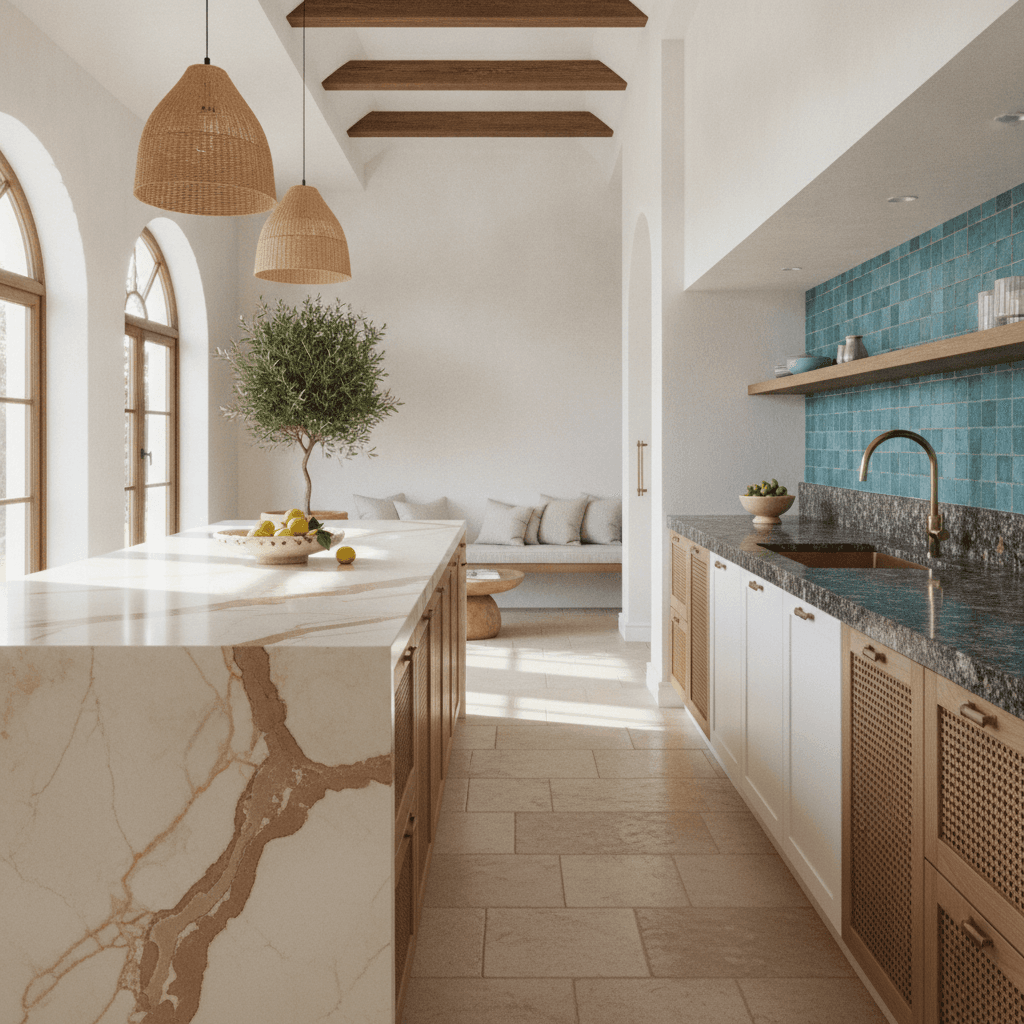
Selecting the perfect kitchen countertop is a crucial decision for any home renovation, especially when you are investing in a property on the beautiful Costa del Sol. Two of the most popular and highly regarded options are quartz and granite. Both offer exceptional durability and aesthetic appeal, but they differ significantly in composition, maintenance requirements, and overall look. Understanding these distinctions is key to choosing the right surface for your lifestyle and the specific demands of a Mediterranean climate.
This guide will help you navigate the choice between these premium materials, ensuring your new kitchen not only looks stunning but also functions perfectly for years to come.
Understanding Quartz Countertops
Quartz countertops have become a favourite in modern kitchens, celebrated for their versatility and practical benefits. They are an engineered stone product, which means they are manufactured using a blend of natural quartz minerals (typically 90-95%) combined with resins, polymers, and pigments.
What is Quartz?
Unlike natural stone, quartz countertops are fabricated. This process allows for a high degree of control over the final product's appearance, resulting in uniform colours and patterns. The resins bind the quartz particles together, creating a non-porous surface that is highly resistant to stains and bacteria. This engineered nature makes quartz a consistent and reliable choice for kitchen surfaces.
Advantages of Quartz
- Non-Porous Surface: One of the biggest benefits of quartz is its non-porous nature. This means it does not absorb liquids, making it highly resistant to stains from coffee, wine, oil, and other common kitchen spills. It also prevents bacteria from penetrating the surface, contributing to a more hygienic kitchen environment.
- Low Maintenance: Quartz countertops do not require sealing, unlike natural stone. Regular cleaning with mild soap and water is usually sufficient to keep them looking pristine.
- Wide Range of Colours and Patterns: Because quartz is engineered, it comes in an extensive array of colours, from solid whites and greys to patterns that mimic natural stone like marble or granite. This design flexibility allows homeowners to achieve a specific aesthetic that might be difficult to find in natural materials.
- Durability: Quartz is incredibly hard and resistant to chips and scratches, making it a robust choice for high-traffic kitchens. Its uniform composition also means there are no natural fissures or weak points.
Disadvantages of Quartz
- Heat Sensitivity: While durable, quartz can be damaged by extreme heat. Placing hot pots or pans directly onto the surface without a trivet can cause discolouration or cracking due to the resin content. This is an important consideration for kitchens where high heat is frequently used.
- Cost: Quartz can be more expensive than some granite options, particularly for premium designs or brands. The manufacturing process and specific aesthetic can influence the final price.
- Less Natural Appearance: For those who prefer the unique, organic look of natural stone, quartz's engineered consistency might feel less authentic. While some designs mimic natural stone well, they are still manufactured.
Understanding Granite Countertops
Granite has been a classic choice for kitchen countertops for decades, revered for its natural beauty and exceptional strength. It is an igneous rock, formed from molten magma deep within the Earth's crust, making each slab truly unique.
What is Granite?
Granite is a 100% natural stone, quarried from mountains around the world. It is composed primarily of quartz, feldspar, and mica, which give it its distinctive speckled or veined appearance. The natural formation process ensures that no two slabs of granite are exactly alike, offering a one-of-a-kind surface for every kitchen.
Advantages of Granite
- Unique Natural Beauty: The primary appeal of granite lies in its unparalleled natural patterns, colours, and variations. Each slab tells a geological story, adding an organic and luxurious feel to any kitchen. For homeowners seeking a truly unique aesthetic, granite is often the preferred choice.
- High Heat Resistance: Granite is incredibly resistant to heat. You can typically place hot pots and pans directly onto its surface without fear of damage, making it very practical for cooking enthusiasts. This is a significant advantage over quartz.
- Scratch Resistance: As one of the hardest natural stones, granite is highly resistant to scratches from knives and other kitchen utensils, maintaining its smooth surface over time.
- Adds Property Value: Due to its natural origin and luxurious appeal, granite countertops are often seen as a premium upgrade that can enhance the resale value of a property, particularly in desirable locations like the Costa del Sol.
Disadvantages of Granite
- Porous Surface: Being a natural stone, granite is porous. This means it can absorb liquids and is susceptible to staining if not properly sealed. Spills, especially acidic ones, need to be wiped up quickly.
- Requires Sealing: To protect against stains and bacteria, granite countertops need to be sealed periodically, typically once a year or every few years, depending on the specific stone and sealant used. This adds a minor maintenance task to your routine.
- Colour and Pattern Inconsistency: While its uniqueness is an advantage, the natural variations in granite mean that samples might not perfectly match the slab you receive. It is always recommended to view the actual slab before purchase.
- Weight: Granite is a very heavy material, which can make installation more complex and may require additional cabinet support. This is usually handled by professional installers, such as the team at Dekorama, ensuring a safe and secure fit for your custom kitchens.
Quartz vs. Granite: A Direct Comparison for Your Kitchen
When renovating your home on the Costa del Sol, the choice between quartz and granite for your kitchen countertops comes down to a few key factors. Let us break down the main differences.
Appearance and Aesthetics
- Quartz: Offers a uniform, consistent look with a vast range of colours and patterns, including those mimicking natural stone. Ideal for modern, minimalist designs or achieving a specific colour scheme.
- Granite: Provides a natural, organic, and unique appearance with variations in veining and speckles. Perfect for those who appreciate the beauty of natural materials and desire a one-of-a-kind surface.
Durability and Maintenance
- Quartz: Highly durable, scratch and chip resistant. Non-porous, so it is stain-resistant and does not require sealing. Sensitive to high heat.
- Granite: Extremely durable, highly heat and scratch resistant. Porous, requiring periodic sealing to prevent stains. Spills should be cleaned promptly.
Cost Considerations
The price of both quartz and granite can vary widely based on quality, rarity of the pattern, brand, and installation complexity. Generally, basic granite options might be slightly less expensive than premium quartz designs. However, high-end, exotic granite slabs can easily surpass the cost of most quartz options. When planning your budget for full home renovations on the Costa del Sol, it is wise to get quotes for specific materials.
Suitability for Costa del Sol Lifestyle
Living on the Costa del Sol often means enjoying an indoor-outdoor lifestyle, with kitchens that might open onto terraces or be used frequently for entertaining. Both materials are well-suited to the climate, but consider these points:
- Heat: Granite's superior heat resistance is a definite plus for busy kitchens, especially during hot summer months or if you frequently place hot dishes directly on surfaces.
- Sunlight: Prolonged exposure to direct UV sunlight can sometimes cause discolouration in certain quartz colours over many years, particularly in outdoor kitchen settings. Granite is generally more resistant to UV fading.
- Maintenance: If you prefer minimal upkeep, quartz's no-sealing requirement is a clear advantage. However, sealing granite is a straightforward task that takes little time.
Making Your Decision: Key Factors to Consider
Choosing the right countertop for your home in Benalmádena, Marbella, or Fuengirola involves weighing your personal preferences and practical needs.
Budget
Determine your budget early. While both materials offer a range of price points, understanding what you are willing to spend will narrow down your options. Remember to factor in installation costs, which can vary based on the complexity of your custom kitchens design.
Style Preference
Do you prefer the consistent, modern look of engineered stone, or the unique, natural beauty of granite? Consider your overall kitchen design and the aesthetic you want to achieve. Dekorama offers a wide selection of premium materials to match any style.
Maintenance Tolerance
Are you comfortable with the occasional sealing required for granite, or do you prefer the virtually maintenance-free nature of quartz? Your lifestyle and willingness to perform upkeep tasks should influence your choice.
Usage Habits
Think about how you use your kitchen. If you are a passionate cook who frequently places hot pans on surfaces, granite's heat resistance might be a priority. If you value a highly hygienic, stain-resistant surface above all else, quartz could be a better fit. For example, if you are planning complete bathroom renovations as well, the same considerations apply for vanity tops.
How much does encimera cocina cuarzo vs granito cual elegir cost?
The final price depends on the size, the material specification and whether the project involves changes to plumbing or electrics. On the Costa del Sol, the most useful starting point is a quote based on actual site measurements.
Dekorama provides a technical visit and itemised quote so you can compare options properly.
How long does encimera cocina cuarzo vs granito cual elegir take to complete?
The timeline depends on the scope of work, the current condition of the property and material availability. Fixing finishes and measurements before work starts avoids unnecessary stoppages once the renovation is under way.
Frequently asked questions
- Is quartz or granite more expensive?
- Prices for both quartz and granite vary significantly based on quality, pattern, and brand. Generally, basic granite can be less expensive than premium quartz. However, exotic granite slabs often cost more than high-end quartz. It is best to get specific quotes for the materials you are considering for your project on the Costa del Sol.
- Which is more durable for a busy kitchen?
- Both quartz and granite are highly durable. Quartz is very resistant to chips and scratches and is non-porous, making it stain-resistant. Granite is extremely hard, highly resistant to heat and scratches, but requires sealing due to its porous nature. Your specific usage and maintenance preference will determine which is 'more' durable for your needs.
- Do granite countertops require a lot of maintenance?
- Granite countertops require periodic sealing, typically once a year or every few years, to protect against stains. This is a simple process that homeowners can do themselves. Beyond sealing, daily cleaning involves mild soap and water. Compared to quartz, it requires slightly more attention, but it is not considered high maintenance.
- Can quartz countertops be repaired if chipped?
- Small chips and cracks in quartz countertops can often be repaired by a professional using epoxy resin and colour-matching techniques. The success of the repair depends on the extent of the damage and the skill of the technician. It is advisable to contact your installer or a specialist for assessment and repair.
- Which material is better for outdoor kitchens on the Costa del Sol?
- For outdoor kitchens on the Costa del Sol, granite is generally preferred due to its superior resistance to UV rays and extreme heat. While some quartz products are designed for outdoor use, many can discolour over time with prolonged direct sun exposure. Granite's natural properties make it a robust choice for al fresco dining areas. Choosing between quartz and granite is a significant decision for your kitchen renovation. Both offer distinct advantages and can elevate the look and functionality of.